Rybelsus (semaglutide tablets): uses, doses, cost and how to take it
The short answer
Rybelsus is semaglutide in a once-daily tablet from Novo Nordisk. It's approved for adults with type 2 diabetes, to improve blood sugar control and to reduce major cardiovascular events in those at high risk. It isn't approved for weight loss. If your commercial insurance covers Rybelsus, the savings offer lowers the cost to as little as $25.
Key takeaways
- Rybelsus is approved only for adults with type 2 diabetes. It has no weight-loss indication.
- Each morning: one tablet, empty stomach, up to 4 ounces of plain water, then wait at least 30 minutes.
- If your commercial insurance covers Rybelsus, the savings offer can lower the cost to as little as $25.
- Rybelsus and Ozempic tablets aren't swapped mg for mg. A switch needs a new prescription from your prescriber.
- Missed a tablet? Skip it and take the next one the following day. Never take more than one a day.
On this page
- What is Rybelsus approved for?
- What doses does Rybelsus come in?
- How do you take Rybelsus?
- Rybelsus vs Ozempic tablets: what is the difference?
- How well does Rybelsus work?
- How much does Rybelsus cost?
- Does insurance or Medicare cover Rybelsus?
- What are the side effects of Rybelsus?
- What if I miss a dose of Rybelsus?
- How do I store Rybelsus?
- How does Rybelsus compare with other options?
- Frequently asked questions
- Sources
Rybelsus at a glance
| Active ingredient | semaglutide |
|---|---|
| Maker | Novo Nordisk |
| FDA-approved uses |
|
| Forms and strengths |
|
| Medicare GLP-1 Bridge | Not in the Bridge |
| With commercial insurance that covers it | $25 per fill at 14 mg, Manufacturer savings card (rybelsus.com) |
| Label | Revised: 1/2026 (DailyMed version 14) |
Rybelsus dose schedule from the label
RybelsusRevised: 1/2026 (DailyMed version 14)
Put it on a calendar with the titration schedule builder. Only your prescriber decides when, and whether, your dose changes.
See every price
Every verified Rybelsus price
| Where you buy | Form · dose | Price | Conditions | Source |
|---|---|---|---|---|
| Manufacturer savings card | Tablet (once daily) · All strengths | $25/month | ConditionsCommercially insured patients with coverage for Rybelsus. Pay as little as $25 for a 1-, 2- or 3-month prescription of 7 mg or 14 mg (the 3 mg dose is $25 each month); maximum savings $100 per 1-month, $200 per 2-month or $300 per 3-month supply. Eligibility and restrictions apply. Note: Novo Nordisk states Rybelsus is being replaced by the Ozempic pill and existing Rybelsus savings offers can be used for Ozempic. | rybelsus.com |
Rybelsus is semaglutide you swallow instead of inject. Novo Nordisk makes it as a once-daily tablet for adults with type 2 diabetes, and it shares a single FDA label (Revised: 1/2026 (DailyMed version 14)) with Ozempic tablets. That shared label causes most of the confusion around Rybelsus, so this guide spends time on it. Where we cite a price, it comes from the manufacturer’s or the government’s own page.
What is Rybelsus approved for?
The label lists two uses, both in adults with type 2 diabetes:
- Along with diet and exercise, to improve glycemic control (blood sugar control).
- To reduce the risk of major adverse cardiovascular events (serious heart and blood vessel problems) in adults with type 2 diabetes who are at high risk for these events.
Rybelsus has no weight-loss indication. The semaglutide product approved for long-term weight reduction is Wegovy, which also comes as a daily tablet in its own strengths.
What doses does Rybelsus come in?
Rybelsus comes in three strengths: 3 mg, 7 mg, 14 mg. A bottle holds 30 tablets, a 30-day supply. The label’s path through them is short.
- Days 1 to 30: 3 mg once daily. This is the initiation phase, the starting period. The label states plainly that this dosage isn’t effective for glycemic control. Its job is to let your body adjust.
- Days 31 to 60: 7 mg once daily.
- Day 61 onward. If you need more glycemic control, the dosage is increased to 14 mg once daily. If you don’t, 7 mg continues. The highest dose on the schedule is 14 mg.
Your prescriber decides whether you stay at 7 mg or move to 14 mg. The dose ladder above shows each step, and the titration schedule tool turns it into dates. (Titration means stepping a dose up slowly.)
One rule applies at every dose: no more than one tablet per day. Under the label’s instructions, two 7 mg tablets aren’t a substitute for one 14 mg tablet.
How do you take Rybelsus?
How you take Rybelsus matters more than with most tablets. The label’s instructions are specific:
- Take it once daily, in the morning, on an empty stomach.
- Take it with plain water only, up to 4 ounces. No other liquid.
- Swallow the tablet whole. Don’t split, crush, chew or dissolve it.
- Wait at least 30 minutes before you eat, drink other beverages or take other oral medicines.
In practice, Rybelsus is the first thing you take in the day, with a small glass of water. Breakfast, coffee and other pills wait half an hour. If you take other morning medicines, especially ones with their own empty-stomach rules, ask your pharmacist how to order them.
The label notes one interaction by name. In a drug interaction study, levothyroxine exposure rose 33% when it was taken with semaglutide tablets. If you take thyroid medicine, your prescriber may want to monitor it.
Rybelsus vs Ozempic tablets: what is the difference?
Both are once-daily semaglutide tablets made by Novo Nordisk, taken with the same morning routine, and described in one shared label. They’re still two separate products, and the label is firm on the key point: Rybelsus and Ozempic tablets are not substitutable on a mg-to-mg basis.
The strengths show why. Rybelsus is 3 mg, 7 mg and 14 mg. Ozempic tablets are 1.5 mg, 4 mg, 9 mg. A 7 mg Rybelsus tablet doesn’t correspond to 7 mg of anything in the Ozempic tablet range.
What the label does give is a pairing for people who switch after the first 30 days:
- Rybelsus 7 mg once daily corresponds to Ozempic tablets 4 mg once daily.
- Rybelsus 14 mg once daily corresponds to Ozempic tablets 9 mg once daily.
Two conditions come with that table. The label says not to switch between the two products during the initiation phase (days 1 to 30). And when a switch is made, you start the new product the day after you stop the old one. A switch needs a new prescription written for the other product at its own strength. It’s never a matter of taking the same number of milligrams.
Novo Nordisk states that Rybelsus is being replaced by the Ozempic pill, and that existing Rybelsus savings offers can be used for Ozempic. If your pharmacy tells you a change is coming, the pairing above is what the label gives your prescriber to work from. There’s more on the tablets in the Ozempic guide.
Switching from the Ozempic pen to Rybelsus
The label covers one move from the injection. If you take the 0.5 mg dose of Ozempic injection, you may switch to Rybelsus, starting 7 mg or 14 mg once daily one week after your last injection. It gives no instruction for other injection doses. The switching planner shows what the labels say for other pairs of medicines.
How well does Rybelsus work?
The label reports each trial separately, and the figures below belong to those trials.
- Blood sugar, alone. In a 26-week monotherapy trial (Rybelsus as the only diabetes medicine), HbA1c, a blood test of average blood sugar over recent months, changed by -1.2% with Rybelsus 7 mg and -1.4% with 14 mg, versus -0.3% with placebo.
- Weight in the same trial. The difference from placebo in body weight was -0.9 kg with 7 mg and -2.3 kg with 14 mg.
- Against sitagliptin. At 26 weeks, HbA1c changed by -1% with Rybelsus 7 mg and -1.3% with 14 mg, versus -0.8% with sitagliptin 100 mg.
- Heart. In Trial 7, with 9,650 patients and a median follow-up of about 49.6 months, semaglutide tablets 14 mg reduced major adverse cardiovascular events, with a hazard ratio of 0.86. (A hazard ratio compares risk between two groups.) Events occurred in 12% of patients on the tablets and 13.8% on placebo.
These are trial averages in adults with type 2 diabetes. They aren’t a prediction for one person.
How much does Rybelsus cost?
The price Novo Nordisk publishes for Rybelsus is its savings offer. If you have commercial insurance that covers Rybelsus and you’re eligible, you pay as little as $25 for a 1-, 2- or 3-month prescription of 7 mg or 14 mg. For the 3 mg starting dose it’s as little as $25 each month. The offer has a maximum saving per fill.
If you have no coverage, ask your pharmacy for its cash price. Compare it with the manufacturers’ self-pay prices for other medicines your prescriber considers suitable. Be cautious of any site that states a Rybelsus cash price without a source. The Rybelsus cost page goes through the options, and the cost calculator prices the other medicines on this site. Our savings card guide explains how manufacturer offers work.
Does insurance or Medicare cover Rybelsus?
Commercial plans often cover Rybelsus for type 2 diabetes, with prior authorization (the plan’s approval before it pays) or step requirements (trying another drug first) that vary by plan. The savings offer only works on top of that coverage. If you’re on Medicare, Medicaid or another government program, you can’t use it.
For Medicare, CMS lists type 2 diabetes as an indication eligible for Part D coverage, and says people with a GLP-1 prescription for a covered indication should keep getting it through their Part D plan. Rybelsus isn’t one of the products in the Medicare GLP-1 Bridge, which covers certain medicines for weight management only.
Rybelsus is one of the three semaglutide brands with a negotiated Medicare price. CMS and Novo Nordisk agreed a price of $274 for a 30-day supply for 2027, against a 2024 list price of $959, a 71% discount, effective January 1, 2027. Your copay will still depend on your plan. The Medicare guide has the wider rules.
What are the side effects of Rybelsus?
The common reactions are gastrointestinal (stomach and bowel). In the label’s placebo-controlled trials, nausea was reported by 11 percent of patients on 7 mg and 20 percent on 14 mg, compared with 6 percent on placebo. Abdominal pain was reported by 10 percent and 11 percent (placebo 4 percent), diarrhea by 9 percent and 10 percent (placebo 4 percent), and decreased appetite by 6 percent and 9 percent (placebo 1 percent). Counting all gastrointestinal reactions, the rates were 41% on 14 mg, 32% on 7 mg and 21% on placebo. The label says most reports of nausea, vomiting or diarrhea happened during dose escalation, while the dose was going up.
Some people stopped because of these effects. A greater share of patients on 14 mg (8%) and 7 mg (4%) discontinued treatment due to gastrointestinal reactions than on placebo (1%).
Low blood sugar was more frequent when the tablets were used with insulin or a sulfonylurea. The label says to consider lowering the dose of those medicines when Rybelsus is started. That’s a decision for your prescriber.
Hair loss isn’t in the Rybelsus trial tables. It appears among reactions reported after approval, and the label says the frequency of such voluntary reports can’t be reliably estimated.
The boxed warning
Rybelsus carries a boxed warning about thyroid C-cell tumors. In plain words: semaglutide caused thyroid C-cell tumors in rodents, and it’s unknown whether the tablets cause them, including medullary thyroid carcinoma (MTC), in humans. Rybelsus is contraindicated, meaning it must not be used, in people with a personal or family history of MTC or with Multiple Endocrine Neoplasia syndrome type 2 (MEN 2), and after a prior serious hypersensitivity (allergic) reaction to semaglutide or any ingredient.
The label’s other warnings cover acute pancreatitis, diabetic retinopathy complications, low blood sugar with insulin or sulfonylureas, acute kidney injury from dehydration, severe gastrointestinal reactions, serious allergic reactions, acute gallbladder disease, and aspiration (stomach contents entering the lungs) during general anesthesia or deep sedation. Tell your healthcare providers you take Rybelsus before any planned surgery or procedure.
If you’re planning a pregnancy, the label says to stop Rybelsus at least 2 months before. The label doesn’t recommend breastfeeding during treatment.
Contact a clinician promptly if you have severe abdominal pain that doesn’t ease, vomiting or diarrhea that leaves you unable to keep fluids down, or signs of an allergic reaction.
What if I miss a dose of Rybelsus?
The label’s rule is one sentence: if a dose is missed, skip the missed dose and take the next dose the following day. There’s no catch-up window like there is with weekly injections, and the one-tablet-per-day limit still applies. The missed dose tool covers Rybelsus along with the other medicines on this site.
How do I store Rybelsus?
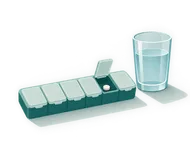
Store Rybelsus at room temperature, 68°F to 77°F (20°C to 25°C), in its original bottle. The label says to keep the tablets in the original bottle until use to protect them from moisture. So a weekly pill organizer isn’t what the label describes, and a steamy bathroom cabinet is a poor place for the bottle. It doesn’t need refrigeration.
How does Rybelsus compare with other options?
Rybelsus is the tablet option among GLP-1 medicines for type 2 diabetes. The injectable options include the Ozempic pen, Mounjaro and Trulicity, each taken once a week. Their labels differ in approved uses and dose steps. The trials above didn’t compare Rybelsus with those injections, so the label can’t tell you which would work better for you. For form and cost side by side, the pen vs vial vs pill comparer covers the medicines on this site.
Where to get Rybelsus
1. Manufacturer savings card
$25 per fill at 14 mg
Ranked by cost only. Manufacturer and government programs never pay us. To see every option for your situation, try the cheapest-path quiz.
Frequently asked questions
How much does Rybelsus cost?
If your commercial insurance covers it, the savings offer lowers the cost to as little as $25 for a 1-, 2- or 3-month prescription of 7 mg or 14 mg, and $25 each month for 3 mg.
Is Rybelsus approved for weight loss?
No. Rybelsus has no weight-loss indication. Both of its approved uses are in adults with type 2 diabetes. The semaglutide product approved for long-term weight reduction is Wegovy, which also comes as a daily tablet in its own strengths. In a 26-week trial on the Rybelsus label, the difference from placebo in body weight was -0.9 kg with 7 mg and -2.3 kg with 14 mg.
What doses does Rybelsus come in?
Rybelsus comes in three tablet strengths: 3 mg, 7 mg, 14 mg. The label starts everyone on 3 mg once daily for days 1 to 30, moves to 7 mg for days 31 to 60, and allows an increase to 14 mg from day 61 if additional glycemic (blood sugar) control is needed. The label says the 3 mg starting step isn't effective for glycemic control.
How do you take Rybelsus?
Take one tablet once daily in the morning on an empty stomach, with up to 4 ounces of plain water and no other liquid. Swallow it whole. Wait at least 30 minutes before you eat, drink anything else or take other oral medicines. The label says not to take more than one tablet per day.
Is Rybelsus the same thing as Ozempic tablets?
Both are semaglutide tablets from Novo Nordisk and they share one FDA label, but that label says they're not substitutable on a mg-to-mg basis. Rybelsus comes in 3 mg, 7 mg and 14 mg. Ozempic tablets come in 1.5 mg, 4 mg and 9 mg. The label pairs Rybelsus 7 mg with Ozempic tablets 4 mg, and Rybelsus 14 mg with Ozempic tablets 9 mg.
Is Rybelsus being discontinued?
Novo Nordisk states that Rybelsus is being replaced by the Ozempic pill, and that existing Rybelsus savings offers can be used for Ozempic. If you take Rybelsus, ask your prescriber or pharmacist what this means for your next prescription.
What happens if I miss a dose of Rybelsus?
The label says that if you miss a dose, skip it and take the next dose the following day. The label also says not to take more than one tablet per day, so don't make up a missed tablet by doubling the next one.
What are the most common side effects of Rybelsus?
In the label's placebo-controlled trials, gastrointestinal (stomach and bowel) reactions were the most common. They occurred in 41% of patients on 14 mg, 32% on 7 mg and 21% on placebo. Nausea, abdominal pain, diarrhea, decreased appetite, vomiting and constipation are the reactions listed in the label's table. Most reports of nausea, vomiting or diarrhea came during dose escalation, while the dose was going up.
Does Medicare cover Rybelsus?
CMS, the federal Medicare agency, lists type 2 diabetes as an indication eligible for Part D coverage. So Part D plans can cover Rybelsus for it under each plan's own formulary and rules. Rybelsus isn't part of the Medicare GLP-1 Bridge. From January 1, 2027, the negotiated Medicare price for semaglutide is $274 for a 30-day supply.
Sources (24)
- 1.FDA label (DailyMed): Rybelsus and Ozempic tablets prescribing information, section 2.1
“Take one RYBELSUS or OZEMPIC tablet orally once daily on an empty stomach in the morning with water (up to 4 ounces of water). Do not take RYBELSUS or OZEMPIC tablets with other liquids besides water”
- 2.FDA label (DailyMed): Rybelsus and Ozempic tablets prescribing information, section 2.1
“After taking RYBELSUS or OZEMPIC tablets, wait at least 30 minutes before eating food, drinking beverages or taking other oral medications”
- 3.FDA label (DailyMed): Rybelsus and Ozempic tablets prescribing information, section 2.1
“Swallow tablets whole. Do not split, crush, chew or dissolve in any solution.”
- 4.FDA label (DailyMed): Rybelsus and Ozempic tablets prescribing information, section 2.1
“Do not take more than one tablet per day.”
- 5.FDA label (DailyMed): Rybelsus and Ozempic tablets prescribing information, section 2.2
“Starting Dosage (Initiation Phase) (Days 1 to 30): The recommended starting dosage is 3 mg orally once daily (this dosage is not effective for glycemic control).”
- 6.FDA label (DailyMed): Rybelsus and Ozempic tablets prescribing information, section 2.1
“RYBELSUS and OZEMPIC tablets are not substitutable on a mg-to-mg basis.”
- 7.FDA label (DailyMed): Rybelsus and Ozempic tablets prescribing information, section 2.3
“When switching between RYBELSUS and OZEMPIC tablets, initiate the other semaglutide tablet product the day after discontinuing the previous semaglutide tablet product.”
- 8.FDA label (DailyMed): Rybelsus and Ozempic tablets prescribing information, section 2.4
“One week after discontinuing 0.5 mg of subcutaneous OZEMPIC injection, start 7 mg or 14 mg of RYBELSUS orally once daily.”
- 9.FDA label (DailyMed): Rybelsus and Ozempic tablets prescribing information, section 16
“Store RYBELSUS and OZEMPIC tablets at 20°C to 25°C (68°F to 77°F); excursions permitted to 15°C to 30°C (59°F to 86°F) [see USP Controlled Room Temperature]. Store and dispense in the original bottle.”
- 10.FDA label (DailyMed): Rybelsus and Ozempic tablets prescribing information, section 16
“Store tablets in the original bottle until use to protect tablets from moisture. Store product in a dry place away from moisture.”
- 11.FDA label (DailyMed): Rybelsus and Ozempic tablets prescribing information, section 8.3
“Discontinue RYBELSUS or OZEMPIC tablets in women at least 2 months before a planned pregnancy due to the long washout period for semaglutide”
- 12.FDA label (DailyMed): Rybelsus and Ozempic tablets prescribing information, section 8.2
“advise patients that breastfeeding is not recommended during treatment with RYBELSUS or OZEMPIC tablets.”
- 13.FDA label (DailyMed): Rybelsus and Ozempic tablets prescribing information, section 7.1
“When initiating RYBELSUS or OZEMPIC tablets, consider reducing the dosage of concomitantly administered insulin secretagogue (such as sulfonylureas) or insulin to reduce the risk of hypoglycemia”
- 14.FDA label (DailyMed): Rybelsus and Ozempic tablets prescribing information, section 7.2
“Levothyroxine exposure was increased 33% (90% CI: 1.25 to 1.42) when administered with semaglutide tablets in a drug interaction study”
- 15.FDA label (DailyMed): Rybelsus and Ozempic tablets prescribing information, section 14.2, Table 4
“resulted in a statistically significant reduction in HbA1c compared with placebo (see Table 4).”
- 16.FDA label (DailyMed): Rybelsus and Ozempic tablets prescribing information, section 14.2
“The difference from placebo (95% CI) for semaglutide tablets 7 mg was -0.9 kg (-1.9, 0.1) and for semaglutide tablets 14 mg was -2.3 kg (-3.1, -1.5).”
- 17.FDA label (DailyMed): Rybelsus and Ozempic tablets prescribing information, section 14.3, Table 6
“Treatment with semaglutide tablets 7 mg and semaglutide tablets 14 mg once daily for 26 weeks resulted in a statistically significant reduction in HbA1c compared to sitagliptin 100 mg once daily (see Table 6).”
- 18.FDA label (DailyMed): Rybelsus and Ozempic tablets prescribing information, section 14.4
“Semaglutide tablets significantly reduced the occurrence of MACE. The estimated hazard ratio for time to first MACE was 0.86 (95% CI: 0.77, 0.96) over the median follow-up duration of 49.6 months and 49.4 months for patients randomized to RYBELSUS and placebo, respectively.”
- 19.FDA label (DailyMed): Rybelsus and Ozempic tablets prescribing information, section 4
“A personal or family history of medullary thyroid carcinoma (MTC) or in patients with Multiple Endocrine Neoplasia syndrome type 2 (MEN 2)”
- 20.FDA label (DailyMed): Rybelsus and Ozempic tablets prescribing information, section 4
“A prior serious hypersensitivity reaction to semaglutide or to any of the excipients in RYBELSUS or OZEMPIC tablets. Serious hypersensitivity reactions including anaphylaxis and angioedema have been reported with semaglutide tablets”
- 21.CMS: Information for Part D Plans
“Type 2 diabetes, moderate to severe obstructive sleep apnea, and noncirrhotic metabolic dysfunction-associated steatohepatitis (MASH) with moderate to advanced liver scarring (fibrosis) indications are eligible for Part D coverage. [...] If a Medicare Part D beneficiary has a prescription for a GLP-1 drug for an indication covered under Medicare Part D, they should continue to obtain their GLP-1 through their Part D plan.”
- 22.CMS: Medicare Drug Price Negotiation Program: Negotiated Prices for Initial Price Applicability Year 2027
“Below is the list of negotiated prices, which the statute refers to as maximum fair prices (MFPs), for the 15 selected drugs covered under Medicare Part D that will go into effect beginning January 1, 2027, based on negotiations and agreements reached between CMS and participating drug companies. [table] Drug Name: Ozempic; Rybelsus; Wegovy. Participating Drug Company: Novo Nordisk Inc. Agreed to Negotiated Price for 30-day Supply for CY 2027: $274. List Price for 30-day Supply, CY 2024: $959. Discount of Negotiated Price from 2024 List Price: 71%.”
- 23.
- 24.